Vanilla pound cake might seem straightforward, but I’ve always found its subtlety lies in the vanilla. It’s not just about flavor; it’s about the aroma that fills the kitchen as it bakes, turning a simple batter into something almost hypnotic.
Over the years, I’ve experimented with different vanilla forms—beans, paste, extract—and each brings a tiny twist to the texture and scent. It’s a small detail, but one that transforms the whole experience, making each loaf feel special, almost like a quiet nod to tradition with a personal touch.
This recipe isn’t about fuss or fancy ingredients. It’s about embracing the simplicity, knowing that a good vanilla pound cake can be a perfect base for anything—berries, whipped cream, or just plain with a pat of butter. It’s humble, but it’s honest, and that’s what keeps pulling me back to it.
Focusing on the subtle art of balancing sweetness and aroma by tweaking vanilla extraction methods, this recipe explores how the choice of vanilla—be it beans, paste, or extract—transforms a simple pound cake into a layered sensory experience.
The subtle art of vanilla
- Baking this cake always takes me back to my grandmother’s kitchen, where vanilla scent lingered in the air for hours.
- I love how the simple act of measuring vanilla extract can turn the batter into something almost magical before it hits the oven.
- There’s a quiet pride in making a pound cake that’s moist, tender, and bursting with pure vanilla aroma, especially when shared with friends.
- Sometimes, I get carried away adding extra vanilla just to make the scent even more intoxicating—because why not savor every bit?
- This recipe reminds me that the best things in baking are often the simplest, yet they carry the most warmth and familiarity.
The story behind this recipe
- Baking this vanilla pound cake always reminds me of the quiet mornings in my grandmother’s kitchen. She had this way of measuring vanilla with a tiny spoon, making sure every slice carried that warm, sweet aroma. Those mornings felt like a secret shared between us, simple yet profound.
- Years later, I started experimenting with different vanilla forms—beans, paste, extract—trying to capture that same comforting scent in my own kitchen. It’s funny how a small change can shift the whole mood of the cake, making it feel more personal, more me.
- This recipe isn’t just about the ingredients; it’s about the memories stirred up every time I pull a golden, fragrant loaf from the oven. It’s humble, yes, but somehow, it always feels like a little celebration of simple joys—perfect for sharing, or keeping close on a quiet afternoon.
Vanilla Pound Cake Trivia
- Vanilla pound cake has roots in European baking traditions, dating back centuries when pound cakes used equal parts butter, sugar, eggs, and flour, with vanilla added as a luxurious aroma.
- The classic vanilla flavor in pound cake became popular in America during the early 20th century, coinciding with the rise of vanilla extract production and accessibility.
- Originally, vanilla beans were a rare and expensive ingredient, so early recipes relied heavily on vanilla extract, which was a much later innovation in baking history.
- The simplicity of pound cake meant it was often baked in community kitchens or family homes, making it a shared comfort food across generations.
- Today, vanilla pound cake remains a symbol of nostalgic baking, often associated with holiday gatherings and treasured family recipes.
Ingredient breakdown
- Vanilla extract: I prefer a good quality pure vanilla for that rich, warm aroma that wafts through the batter. If you’re using imitation, it’s fine, but it won’t have that deep complexity you get from real beans.
- Unsalted butter: I always use room temperature butter, soft enough to cream easily. Cold butter will make mixing tougher, and the cake might turn out dense instead of tender.
- Granulated sugar: I like to slightly reduce the sugar if I want a less sweet cake, but honestly, the classic amount gives it that perfect, subtle sweetness without overshadowing the vanilla.
- Eggs: Fresh eggs are a must—they add richness and help the batter emulsify better. Beat them well before adding to keep the texture smooth and airy.
- Flour: I sift my flour to avoid lumps and ensure a lighter crumb. Using cake flour instead of all-purpose can make the cake even softer, but all-purpose works just fine if you don’t have it.
- Salt: Just a pinch enhances all the flavors, especially the vanilla. Don’t skip it, even in this sweet cake—it balances the richness.
- Baking powder: A tiny bit helps with lift, making the pound cake less dense and more tender. Make sure it’s fresh so it doesn’t lose its oomph.
Spotlight on key ingredients
Vanilla extract:
- I prefer a good quality pure vanilla for that rich, warm aroma that wafts through the batter. If you’re using imitation, it’s fine, but it won’t have that deep complexity you get from real beans.
- Unsalted butter: I always use room temperature butter, soft enough to cream easily. Cold butter will make mixing tougher, and the cake might turn out dense instead of tender.
- Granulated sugar: I like to slightly reduce the sugar if I want a less sweet cake, but honestly, the classic amount gives it that perfect, subtle sweetness without overshadowing the vanilla.
Eggs and Flour:
- Eggs: Fresh eggs are a must—they add richness and help the batter emulsify better. Beat them well before adding to keep the texture smooth and airy.
- Flour: I sift my flour to avoid lumps and ensure a lighter crumb. Using cake flour instead of all-purpose can make the cake even softer, but all-purpose works just fine if you don’t have it.
Notes for ingredient swaps
- Dairy-Free: Swap butter for coconut oil or dairy-free margarine. The cake will be slightly lighter in texture and less rich, but still moist and tender.
- Sugar Alternatives: Use honey, maple syrup, or agave nectar instead of granulated sugar. Reduce liquid slightly to compensate; expect a slightly denser crumb.
- Gluten-Free: Replace all-purpose flour with a gluten-free baking mix. You might need an extra tablespoon of liquid for proper batter consistency.
- Vegan Version: Use vegan butter or margarine plus a flaxseed or chia seed egg substitute. The flavor remains subtly vanilla, but watch for slight texture differences.
- Vanilla Essence: If you don’t have vanilla extract, a splash of vanilla essence or vanilla bean paste works—just adjust the quantity to taste.
- Egg-Free: Substitute eggs with applesauce or mashed bananas (about 1/4 cup per egg). The cake will be a little denser with a fruity note.
- Extra Vanilla: Double the vanilla for an intensely aromatic loaf—perfect if you love that deep, fragrant vanilla scent.
Equipment & Tools
- Oven: To bake the cake evenly at the right temperature.
- Loaf pan: To shape the pound cake and support even baking.
- Mixing bowls: To combine wet and dry ingredients separately.
- Electric mixer or whisk: To cream butter and sugar thoroughly and incorporate eggs smoothly.
- Spatula: To fold ingredients gently and smooth the batter.
- Toothpick or cake tester: To check doneness of the baked cake.
Step-by-step guide to vanilla pound cake
- Preheat your oven to 175°C (350°F). Grease a standard 9×5-inch loaf pan with butter and dust lightly with flour, tapping out excess.
- In a mixing bowl, cream together 1 cup (226g) unsalted butter and 1 1/2 cups (300g) sugar. Beat until pale and fluffy, about 3-4 minutes, on medium speed.
- Add 4 large eggs one at a time, beating well after each addition. Make sure each egg is fully incorporated before adding the next. The mixture should look smooth and slightly thickened.
- Stir in 2 teaspoons vanilla extract or vanilla paste. Smell that warm, fragrant aroma filling your kitchen—that’s the good stuff.
- In a separate bowl, sift together 2 1/2 cups (310g) all-purpose flour, 1 teaspoon baking powder, and a pinch of salt. Whisk to combine.
- Gradually add the dry ingredients to the wet mixture, about a third at a time, folding gently with a spatula after each addition. Do not overmix; stop when just combined. The batter should be smooth but not runny.
- Pour batter into the prepared loaf pan, smoothing the top with a spatula. Tap the pan lightly on the counter to release any air bubbles.
- Bake in the preheated oven for 50-60 minutes. Check for doneness at 55 minutes. The top should be golden brown, and a toothpick inserted into the center should come out clean.
- If the cake begins to brown too quickly, tent it loosely with foil after 30 minutes. If the top isn’t golden enough, turn up the oven heat slightly for the last 5 minutes.
- Once baked, turn off the oven and let the cake cool in the pan for 15 minutes. Then, transfer to a wire rack to cool completely before glazing or slicing.
Let the cake cool in the pan for 15 minutes before transferring to a wire rack. Allow it to cool completely before slicing. Serve as is or dust with powdered sugar for an elegant touch.
How to Know It’s Done
- Golden brown crust with a slight crackle on top.
- Toothpick inserted in center comes out clean.
- Cake feels firm but springs back when lightly pressed.
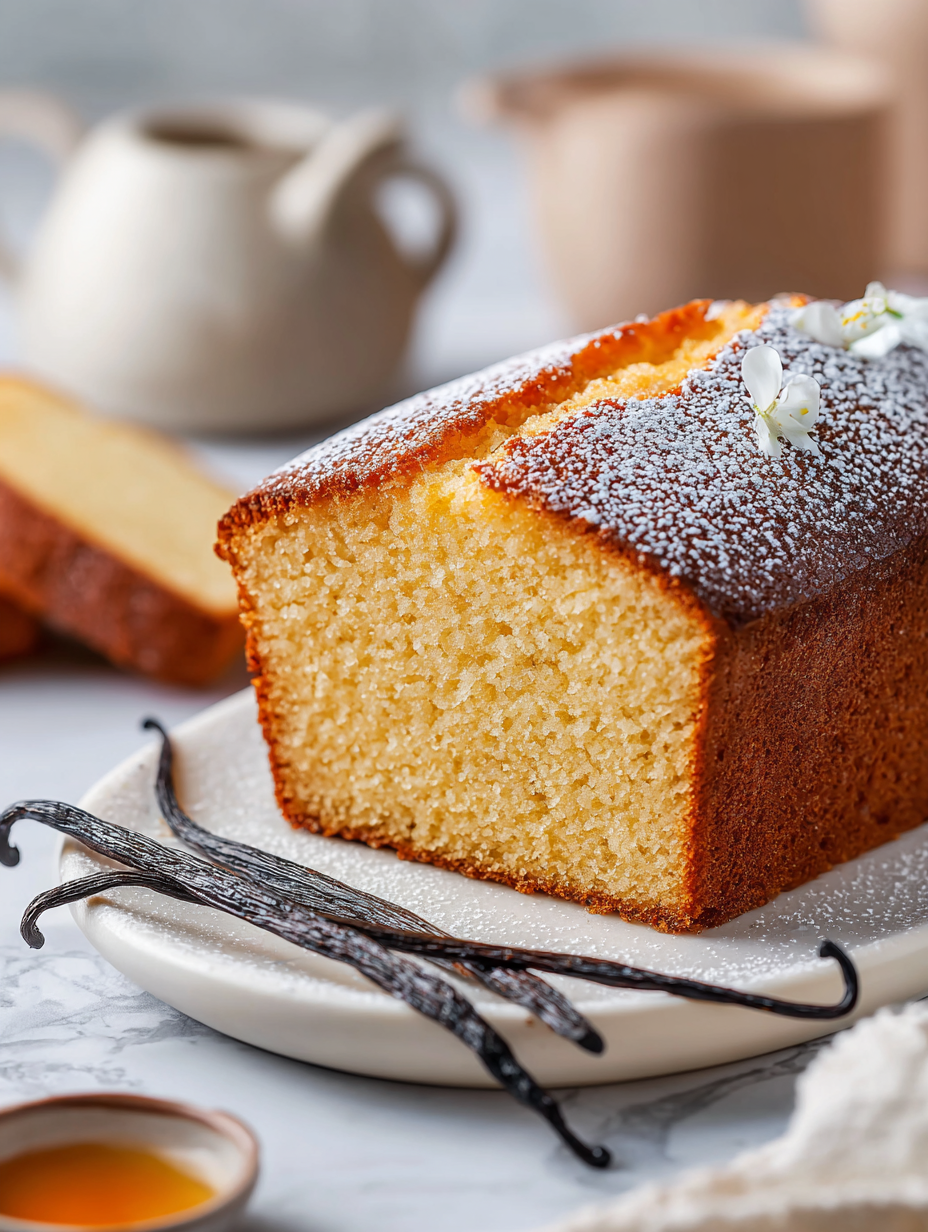
Vanilla Pound Cake
Ingredients
Equipment
Method
- Preheat your oven to 175°C (350°F). Grease a 9x5-inch loaf pan with butter and lightly dust with flour, tapping out the excess.
- In a large mixing bowl, beat the softened butter and sugar together using an electric mixer or whisk until the mixture turns pale, fluffy, and smells sweet—about 3-4 minutes on medium speed.
- Add the eggs one at a time, beating well after each addition. Look for a smooth, slightly thickened batter that feels silky to the touch.
- Stir in the vanilla extract or paste, filling your kitchen with a warm, fragrant aroma that hints at the vanilla’s depth.
- In a separate bowl, sift together the flour, baking powder, and salt to ensure an even, airy crumb. Whisk to combine.
- Gradually add the dry ingredients to the wet mixture in thirds, folding gently with a spatula after each addition until just combined. Avoid overmixing to keep the batter light and airy.
- Pour the batter into your prepared loaf pan, smoothing the top with a spatula. Lightly tap the pan on the counter to release any trapped air bubbles.
- Bake in the preheated oven for 50-60 minutes. Check for doneness at around 55 minutes by inserting a toothpick into the center; it should come out clean, and the top should be golden brown.
- Remove the cake from the oven, tent loosely with foil if it browns too quickly, and let it cool in the pan for 15 minutes.
- Gently transfer the loaf to a wire rack to cool completely before slicing. The cake should be moist, tender, and fragrant with vanilla aroma, perfect for serving plain or with toppings.
Pro tips for perfect pound cake
- Bolded mini-head: Cream butter and sugar thoroughly → Ensure the mixture is pale and fluffy for a tender crumb.
- Bolded mini-head: Use room temperature ingredients → Facilitates even mixing and a smoother batter.
- Bolded mini-head: Don’t overmix after adding flour → Mix until just combined to keep the cake light.
- Bolded mini-head: Check oven temperature with a thermometer → Avoid uneven baking or burnt tops.
- Bolded mini-head: Tap the filled pan on the counter → Releases air bubbles for an even rise.
- Bolded mini-head: Cool in the pan briefly before transferring → Prevents sticking and preserves structure.
- Bolded mini-head: Store airtight to maintain moisture → Keeps the cake fresh and tender for days.
Common mistakes and how to fix them
- FORGOT to check oven temperature → Use an oven thermometer for accuracy.
- DUMPED in all ingredients at once → Add ingredients gradually for better batter texture.
- OVER-TORCHED the cake → Cover loosely with foil if browning too fast.
- MIXED batter too much → Fold gently to keep the cake light and tender.
Quick fixes and pantry swaps
- When batter looks curdled, splash in a teaspoon of milk and gently fold until smooth.
- If cake sinks in the middle, check oven temperature—maybe it’s running too hot or uneven.
- Dumped in too much vanilla? Patch with a drizzle of honey or a sprinkle of sugar to balance flavors.
- Over-baked and dry? Shield the edges with foil halfway through baking for moisture retention.
- When smell shifts to a slight burnt note, rescue by lowering oven temp and tenting with foil for a few minutes.
Prep, store, and reheat tips
- Preparing the batter a day ahead allows flavors to meld; keep it refrigerated in an airtight container for up to 24 hours. Expect a slightly denser texture but a richer vanilla aroma upon baking.
- Bake the cake a day early, let it cool completely, then wrap tightly in plastic wrap. It stays fresh at room temperature for up to 2 days, maintaining moistness and aroma.
- For longer storage, freeze slices or whole cake wrapped in foil and an airtight bag for up to 3 months. Thaw at room temperature until soft and fragrant again.
- Reheat slices briefly in a 150°C (300°F) oven for 8-10 minutes; the cake will revive its tender crumb and warm vanilla scent, perfect for serving warm or room temp.
Top questions about vanilla pound cake
1. Can I use imitation vanilla?
Use good quality vanilla extract or paste for a richer aroma. Cheaper vanilla may lack depth and fragrance.
2. Is vanilla bean paste necessary?
Yes, but it will lack the complex aroma of real vanilla beans, making the cake less fragrant.
3. Why does my cake turn out dense?
Cream the butter and sugar until light and fluffy; this step is key for a tender crumb.
4. Should eggs be cold or room temp?
Make sure eggs are at room temperature for better incorporation and a lighter texture.
5. How do I know when the cake is done?
Bake until the top is golden brown and a toothpick tests clean, about 50-60 minutes.
6. Why is my cake crumbly?
Use a light hand when folding in flour to keep the batter airy and prevent a dense loaf.
7. How should I store the pound cake?
Wrap cooled cake tightly in plastic wrap to keep it moist for storage.
8. Can I freeze the cake?
Freeze slices or the whole cake for up to 3 months; reheat in oven for best texture.
9. My cake is browning too fast?
If the top browns too quickly, tent with foil to avoid burning while the inside cooks through.
10. My cake sinks or is uneven?
Use a thermometer to ensure oven temperature is accurate; uneven baking often causes sinking or undercooked spots.
Baking this vanilla pound cake is like capturing a quiet moment of joy. The warm aroma, the tender crumb—it’s a simple pleasure that’s rooted in tradition but feels fresh every time.
Whether it’s for a cozy weekend or a last-minute treat, this recipe reminds me that good baking isn’t about fuss, but about honest ingredients and a little patience. It’s a small, satisfying act of kindness in an often hectic world.

Hi, I’m Noah Bennett, the creator behind Breathing In Flavors. For me, cooking begins with a breath. Before the first bite, before the plating, before the garnish, there is that quiet moment when steam rises and you inhale. That is where flavor truly begins. Breathing In Flavors is my space to slow down, appreciate ingredients, and cook with awareness. I am so glad you’re here.
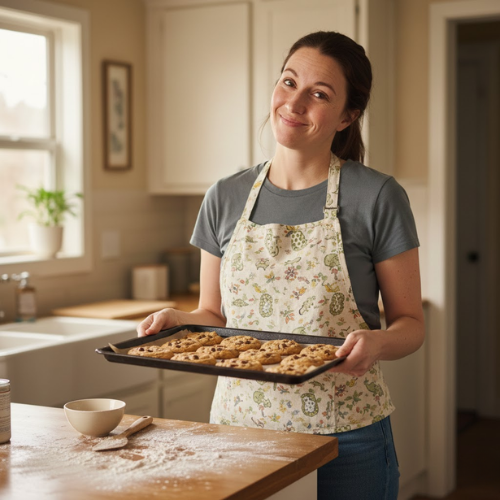 The creator behind Breathing In Flavors.
For me, cooking begins with a breath. Before the first bite, before the plating, before the garnish, there is that quiet moment when steam rises and you inhale. That is where flavor truly begins.
Breathing In Flavors is my space to slow down, appreciate ingredients, and cook with awareness. I am so glad you’re here.
The creator behind Breathing In Flavors.
For me, cooking begins with a breath. Before the first bite, before the plating, before the garnish, there is that quiet moment when steam rises and you inhale. That is where flavor truly begins.
Breathing In Flavors is my space to slow down, appreciate ingredients, and cook with awareness. I am so glad you’re here.