This cranberry orange bread came about on a cold winter morning when I was craving something bright and lively to wake up my senses. I love how the tart cranberries burst open with each bite, contrasting against the sweet, fragrant orange zest. It’s the kind of bread that makes you want to slice thick and feel that little zing on your tongue before the day even begins.
Honestly, I wasn’t aiming for a holiday bake—just something that felt festive without being fussy. But once I tossed the fresh cranberries and citrus into my usual quick bread batter, it turned into this surprisingly vibrant, almost celebratory loaf. It’s become my go-to for weekends when I want a slice of something special that’s not overly sweet or heavy.
What really makes this recipe stand out is the way the bright, tangy fruit pairs with the tender crumb of the bread. It’s perfect for breakfast, snack time, or even as a light dessert. And I love how the aroma of orange and berries fills the kitchen, making the whole house smell like a cozy, citrusy hug.
Focusing on how the bright, tart cranberries and zesty orange peel transform a simple bread into a vibrant, festive treat that captures the spirit of holiday mornings and cozy afternoons.
Bright, tart, and surprisingly festive
- This bread reminds me of childhood mornings spent baking with my grandmother, the smell of citrus filling the kitchen.
- I love how the cranberries pop with a tart burst that cuts through the sweet, tender crumb of the bread.
- Nothing beats the joy of slicing into a warm loaf, watching the vibrant orange and ruby cranberries peek through the crust.
- Baking this is a chaotic yet comforting ritual—measuring, zesting, stirring—each step feels like a small celebration.
- Sharing this bread during holidays feels like passing on a little piece of seasonal cheer, wrapped in a slice of bright, fruity goodness.
The story behind this recipe
- This cranberry orange bread was born from a simple idea—using the bright, tangy cranberries and zesty orange peel to lift a humble loaf into something memorable. I was experimenting on a dreary weekend, craving a burst of citrus and berry that could brighten the house and my mood at once.
- It struck me how cranberries, often relegated to sauces or jams, could be transformed into little juicy pockets within a tender bread. The orange zest adds a fragrant zing that complements the tartness perfectly. That day, I realized this combo was a keeper—perfect for mornings when you need a little cheer, or a snack that feels like a mini celebration.
- heading: ‘The story behind this recipe’
Historical & Cultural Tidbits
- Cranberry orange flavor combos date back to early colonial times, when citrus and preserved berries were treasured for their brightness and shelf life.
- In the 20th century, cranberries became a staple in North American holiday traditions, often paired with citrus to balance their natural tartness.
- Orange zest was historically used in baking to mask bitter flavors and add aromatic complexity before the advent of refined extracts.
Key Ingredients Breakdown
- Fresh cranberries: I love how they ooze tart juice when baked, adding bursts of brightness. Swap for dried cranberries if you prefer a milder flavor, but expect less juiciness.
- Orange zest: The zest gives the bread a lively citrus aroma that wakes up your senses. You can substitute lemon zest for a slightly different tang, but skip if you want a mellow flavor.
- All-purpose flour: I rely on good old plain flour for the structure, but whole wheat works if you want more nuttiness—just expect a denser crumb.
- Granulated sugar: It balances the tart cranberries and zest. For a less sweet loaf, cut back slightly; for extra shine, sprinkle with coarse sugar before baking.
- Butter: I prefer unsalted for control over salt, and it makes the crumb tender. Swap with coconut oil for a dairy-free version, but note the subtle coconut aroma.
- Baking powder: This is my leavening magic—makes the loaf rise and stay fluffy. No good substitutes, but ensure it’s fresh for proper lift.
- Eggs: They bind everything together and give structure. Use flaxseed meal mixed with water for an egg-free tweak, but the loaf might be a tad denser.
Spotlight on key ingredients
Cranberries:
- Fresh cranberries: I love how they ooze tart juice when baked, adding bursts of brightness. Swap for dried cranberries if you prefer a milder flavor, but expect less juiciness.
- Orange zest: The zest gives the bread a lively citrus aroma that wakes up your senses. You can substitute lemon zest for a slightly different tang, but skip if you want a mellow flavor.
Orange zest:
- The zest gives the bread a lively citrus aroma that wakes up your senses. You can substitute lemon zest for a slightly different tang, but skip if you want a mellow flavor.
- All-purpose flour: I rely on good old plain flour for the structure, but whole wheat works if you want more nuttiness—just expect a denser crumb.
- Granulated sugar: It balances the tart cranberries and zest. For a less sweet loaf, cut back slightly; for extra shine, sprinkle with coarse sugar before baking.
Notes for ingredient swaps
- Dairy-Free: Swap butter for coconut oil or a neutral vegetable oil. Expect a slightly different crumb and a subtler richness.
- Sweetener: Replace sugar with honey or maple syrup; reduce other liquids slightly to compensate for moisture. The bread will have a richer, more complex sweetness.
- Cranberries: Use fresh or frozen blueberries for a milder, juicier burst, or dried cranberries for less moisture but sweeter bites.
- Orange Zest: Lemon zest offers a sharper, more citrusy punch, while lime zest gives a more tropical note. Skip if you want a subtler flavor.
- Flour: Whole wheat or spelt flour can be used for a nuttier, denser loaf. Expect darker color and slightly coarser texture.
- Eggs: Flaxseed meal mixed with water (1 tbsp flaxseed + 3 tbsp water per egg) for a vegan option, but the crumb might be a tad denser.
- Baking Powder: Ensure it’s fresh for proper rise; no good substitutes, but you can add a pinch of baking soda if using buttermilk or yogurt instead of juice.
Equipment & Tools
- Loaf pan: Holds the batter during baking to form the loaf shape.
- Mixing bowls: Separate dry and wet ingredients for even mixing.
- Whisk: Combine ingredients smoothly and aerate the batter.
- Spatula: Fold ingredients gently and smooth the top before baking.
- Measuring cups and spoons: Ensure accurate ingredient quantities.
- Wire rack: Cool the bread evenly and prevent sogginess.
Step-by-step guide to Cranberry Orange Bread
- Preheat your oven to 175°C (350°F). Grease a 9×5 inch loaf pan with butter or line with parchment paper. Gather your ingredients and tools on the counter.
- In a small bowl, zest the orange until you have about 2 tablespoons. Juice half the orange (about 1/4 cup). Set aside zest and juice separately.
- In a large mixing bowl, whisk together 2 cups of all-purpose flour, 1 teaspoon baking powder, and 1/4 teaspoon salt. This creates an even dry base.
- In another bowl, melt 1/2 cup unsalted butter (about 45 seconds in the microwave), then whisk in 3/4 cup sugar until combined and slightly fluffy. Add 2 large eggs, one at a time, whisking well after each.
- Stir in the orange juice and zest into the wet mixture. Fold in 1 cup of fresh cranberries gently, avoiding breaking them too much to keep their shape.
- Add the dry ingredients to the wet, stirring just until the flour disappears. Do not overmix—the batter should be a bit lumpy but combined. If it’s too thick, add a splash of milk.
- Pour the batter into your prepared loaf pan, smoothing the top with a spatula. Sprinkle with a little coarse sugar if desired for crunch.
- Bake for 50-60 minutes. Check after 45 minutes—if the top is golden and a toothpick inserted in the center comes out clean, it’s done. If not, continue baking, checking every 5 minutes.
- Once baked, transfer the bread to a wire rack. Let it rest for at least 15 minutes before removing from the pan. This helps the crumb settle and prevents sticking.
- Allow the bread to cool completely before slicing. The aroma of orange and cranberries will fill your kitchen, and the crust should be golden and slightly crisp.
Let the bread cool in the pan for 15 minutes, then transfer to a wire rack. Slice once fully cooled to avoid squishing. Serve at room temperature, perhaps with a smear of butter or just plain.
How to Know It’s Done
- Crust is golden and firm, not overly dark.
- Toothpick inserted in center comes out clean or with moist crumbs.
- Crust crackles slightly when tapped, indicating proper bake.
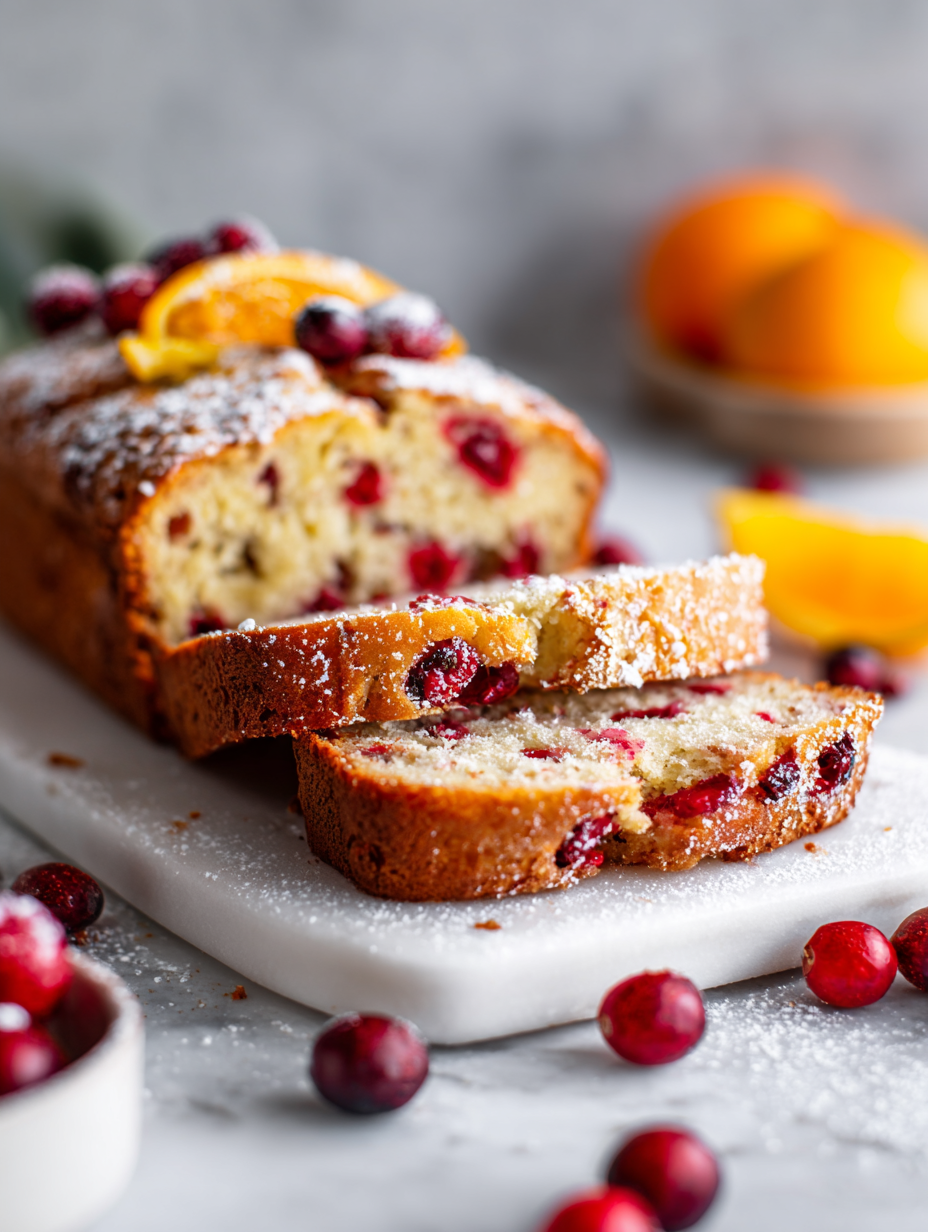
Cranberry Orange Bread
Ingredients
Equipment
Method
- Preheat your oven to 175°C (350°F). Grease your loaf pan or line it with parchment paper and set aside.
- Zest the orange until you have about 2 tablespoons of zest, then juice half the orange to get about 1/4 cup of fresh orange juice. Set both aside.
- In a large mixing bowl, whisk together the all-purpose flour, baking powder, and salt until evenly combined. This creates the dry base.
- In another bowl, melt the butter until just liquid, then whisk in the sugar until the mixture is smooth and slightly fluffy.
- Add the eggs one at a time to the butter mixture, whisking well after each addition to incorporate fully.
- Stir in the orange juice and orange zest into the wet mixture, blending until fragrant and smooth.
- Gently fold in the fresh cranberries, taking care not to burst them all—this keeps their bright, juicy pockets intact.
- Pour the wet ingredients into the dry ingredients and stir gently with a spatula just until combined; the batter will be lumpy but evenly mixed.
- Transfer the batter into your prepared loaf pan, smoothing the top with a spatula. Sprinkle a little coarse sugar on top for added crunch and sparkle.
- Bake in the preheated oven for 50 to 60 minutes, until the top is golden brown and a toothpick inserted into the center comes out clean. Check around 45 minutes to prevent overbaking.
- Once baked, remove the loaf from the oven and cool in the pan for about 15 minutes. Then, transfer it to a wire rack to cool completely before slicing.
- Slice the cooled bread and enjoy the vibrant bursts of cranberry juice and fragrant orange aroma in every bite. Serve plain or with a pat of butter for extra indulgence.
Pro tips for perfect cranberry orange bread
- Brighten with zest: Use fresh orange zest for a vivid citrus aroma that really wakes up the batter before mixing.
- Gentle fold: When adding cranberries, fold them in carefully to prevent bursting and staining the batter with too much juice.
- Even baking: Rotate the loaf halfway through baking for uniform color and don’t open the oven door too often to maintain heat.
- Check crust: Look for a deep golden hue and crackling top, signaling it’s perfectly baked without overdoing it.
- Cooling time: Let the bread cool fully on a wire rack—rushing this can make slices squishy or tear apart.
- Sugar sprinkle: A light sprinkle of coarse sugar on top before baking adds a subtle crunch and a beautiful shimmer.
- Oven accuracy: Always verify your oven’s temperature with an external thermometer—hot spots can cause uneven baking.
Common mistakes and how to fix them
- FORGOT to check oven temperature → Use an oven thermometer for accuracy.
- DUMPED the cranberries too early → Fold them gently at the end to avoid bursting.
- OVER-TORCHED the crust → Cover with foil halfway through baking to prevent burning.
- MISSED the resting time → Let the bread cool completely for clean slices and better texture.
Quick fixes and pantry swaps
- When berries burst too early, fold in gently and add a splash of lemon juice to brighten.
- If bread is dense, check oven temp and increase baking time slightly for a lighter crumb.
- Splash some orange juice into the glaze for an extra citrus shimmer on top.
- Patch cracks on the loaf surface with a bit of batter before baking to keep it intact.
- Shield the crust with foil if it’s browning too fast and crackling without overbaking.
Prep, store, and reheat tips
- You can prepare the batter a day ahead; store it in the fridge covered tightly to prevent drying out. The flavors meld nicely overnight, and the batter will be slightly firmer but still scoopable.
- Bake the bread a day in advance; once cooled completely, wrap it tightly in plastic wrap and then foil. It keeps well at room temperature for up to 2 days, with the cranberries intensifying their tartness over time.
- For longer storage, freeze the fully baked loaf sliced or whole for up to 1 month. Wrap well to prevent freezer burn. Thaw at room temperature, then reheat slices in the microwave for about 15 seconds until warm, watching for steam and aroma.
- Reheating the bread brings out the citrusy fragrance and softens the crumb. Warm slices in the oven at 150°C (300°F) for 10 minutes, or microwave in 10-second bursts for a quick, cozy treat. Expect a tender, fragrant bite with the cranberries still juicy.
Top questions about Cranberry Orange Bread
1. Can I use dried cranberries instead of fresh?
Fresh cranberries add a juicy tartness and burst of color; dried cranberries are milder and less juicily intense.
2. Can I substitute lemon or lime zest?
Yes, you can substitute lemon zest for orange; it gives a sharper, more citric punch, but skip if you prefer mellow flavors.
3. Is there a dairy-free option?
You can replace butter with coconut oil or neutral vegetable oil; expect a slightly different crumb and aroma, but it works well.
4. How do I know when the bread is fully baked?
Ensure the oven is properly preheated and check the loaf around 50 minutes; a golden crust and toothpick test help confirm doneness.
5. Can I make mini loaves or muffins?
Use a loaf pan for a traditional shape; a muffin tin makes smaller, snack-sized portions, but baking times will vary.
6. How should I store leftovers?
Wrap cooled bread tightly in plastic wrap and foil; it keeps fresh at room temp for 2 days, or freeze for longer storage.
7. How should I reheat the bread?
Reheat slices in the microwave for about 15 seconds, or oven at 150°C (300°F) for 10 minutes to revive softness and aroma.
8. Why is my bread dense or heavy?
Avoid overmixing the batter to prevent a dense crumb; fold ingredients gently and don’t overdo the stirring.
9. What if the cranberries burst too much?
If cranberries burst too much, fold them in carefully and consider adding a splash of lemon juice for extra brightness.
10. How can I prevent uneven baking?
Always verify oven temperature with a thermometer; hot spots can cause uneven baking and overly dark crusts.
This cranberry orange bread feels like a bright spot in the season, with its tangy burst and fragrant zest. It’s not just about the flavors—it’s about the little rituals of baking and sharing that make those moments special.
Whenever I make this loaf, I think about how simple ingredients can come together to create something unexpectedly joyful. It’s a reminder to find brightness in the everyday, especially as the days grow shorter and the air turns crisp.

Hi, I’m Noah Bennett, the creator behind Breathing In Flavors. For me, cooking begins with a breath. Before the first bite, before the plating, before the garnish, there is that quiet moment when steam rises and you inhale. That is where flavor truly begins. Breathing In Flavors is my space to slow down, appreciate ingredients, and cook with awareness. I am so glad you’re here.
 The creator behind Breathing In Flavors.
For me, cooking begins with a breath. Before the first bite, before the plating, before the garnish, there is that quiet moment when steam rises and you inhale. That is where flavor truly begins.
Breathing In Flavors is my space to slow down, appreciate ingredients, and cook with awareness. I am so glad you’re here.
The creator behind Breathing In Flavors.
For me, cooking begins with a breath. Before the first bite, before the plating, before the garnish, there is that quiet moment when steam rises and you inhale. That is where flavor truly begins.
Breathing In Flavors is my space to slow down, appreciate ingredients, and cook with awareness. I am so glad you’re here.