Baking a carrot cake loaf feels like a quiet act of rebellion against the overly ornate desserts we often reach for. It’s simple, honest, and packed with that nostalgic scent of warm spices and grated carrots. There’s something unexpectedly refined about transforming humble ingredients into a loaf that feels both familiar and special.
This recipe is more than just a sweet treat; it’s a little piece of childhood comfort with a twist. I love how the smell of cinnamon and nutmeg fills the kitchen, stirring up memories of baking with family on lazy weekends. It’s the kind of bake that invites you to slow down, slice thick pieces, and enjoy a moment of honest, effortless joy.
Focusing on the nostalgic comfort of a homemade carrot cake loaf, this recipe emphasizes the joy of baking something familiar yet unexpectedly refined, blending childhood memories with a dash of kitchen improvisation.
A nostalgic bake with a twist
- Baking this loaf takes me back to lazy Sunday mornings, the smell of cinnamon filling every corner of the house.
- There’s a quiet pride in grating fresh carrots—knowing I’m adding natural sweetness that can’t be rushed or replaced.
- I love how the batter looks lumpy and rustic, a true testament to honest, no-fuss baking.
- This recipe has become my go-to when I want a cozy treat that’s simple but feels like a warm hug.
- Every slice reminds me that good things come from humble ingredients and a little patience.
The story behind this recipe
- This carrot cake loaf was born out of a desire to keep baking simple but flavorful, especially during those hectic mornings when I need something sweet but not fussy. I started experimenting with grated carrots in bread and quickbreads, and it turned into this cozy, rustic loaf that’s become a staple in my kitchen. It’s a reminder that sometimes, the best recipes come from just mixing what you have and trusting the process.
- I remember the first time I baked this for a brunch gathering—everyone was surprised how moist and fragrant it was, with that warm hint of cinnamon and the slight crunch of walnuts. It’s become my go-to for easy mornings and casual weekends, where a slice of this loaf feels like a small act of comfort and a bit of kitchen improvisation.
- heading:
Trivia and historical notes
- Carrot cake dates back to medieval Europe, where root vegetables were used to add moisture and sweetness to baked goods.
- The popularity of carrot cake surged in the United States during the 1960s and 1970s, becoming a beloved dessert for its rich, spiced flavor.
- Ancient carrot varieties were originally purple or white; the orange carrots we know today were cultivated in the 17th century in the Netherlands.
- Carrots contain natural sugars that, when baked, caramelize and enhance the cake’s deep, warm flavors without added syrup.
- Loaf-style carrot cakes are a more recent adaptation, making the dessert portable and perfect for casual snacking or picnics.
Ingredient breakdown: key components
- Carrots: I use freshly grated carrots; their natural sweetness and moist texture make the loaf tender. Skip the pre-shredded stuff—fresh is juicier and more vibrant in flavor.
- Brown sugar: I prefer light brown for a mellow caramel note, but dark brown adds a deeper, richer sweetness that makes the loaf feel indulgent. Adjust based on your sweet tooth.
- Cinnamon & nutmeg: I love the warm, spicy aroma these spices release in the oven. Don’t skimp—more spice equals more cozy nostalgia, especially when it’s that smell that hits you first.
- Oil: I usually go for neutral vegetable oil, but melted butter adds a richer, more buttery flavor. Be sure to measure accurately—too much can make the loaf greasy.
- Flour: I stick with all-purpose, but a touch of whole wheat flour can add a nutty depth. Just don’t overdo it or the loaf might turn denser than intended.
- Nuts (optional): Walnuts or pecans add crunch and contrast, but if you’re allergic or out, toasted oats or coconut flakes work well for texture without the bite.
- Baking powder & soda: I keep these fresh—baking soda especially—so the loaf rises nicely and stays light. Old leavening agents can lead to flat, dense results.
Spotlight on key ingredients
Carrots & Spices:
- Carrots: I use freshly grated carrots; their natural sweetness and moist texture make the loaf tender. Skip the pre-shredded stuff—fresh is juicier and more vibrant in flavor.
- Brown sugar: I prefer light brown for a mellow caramel note, but dark brown adds a deeper, richer sweetness that makes the loaf feel indulgent. Adjust based on your sweet tooth.
- Cinnamon & nutmeg: I love the warm, spicy aroma these spices release in the oven. Don’t skimp—more spice equals more cozy nostalgia, especially when it’s that smell that hits you first.
Oil & Nuts:
- Oil: I usually go for neutral vegetable oil, but melted butter adds a richer, more buttery flavor. Be sure to measure accurately—too much can make the loaf greasy.
- Nuts (optional): Walnuts or pecans add crunch and contrast, but if you’re allergic or out, toasted oats or coconut flakes work well for texture without the bite.
Notes for ingredient swaps
- Fruits & Vegetables: Fresh carrots are best for natural sweetness and moisture; canned or pre-shredded carrots can make the batter watery—use sparingly and adjust baking time.
- Sugar: Light brown sugar adds warmth and depth; coconut sugar can be a one-to-one swap, but it imparts a caramel note that might alter the flavor slightly.
- Oil: Neutral vegetable oil keeps the loaf tender; melted butter offers richer flavor but can make the crumb slightly denser, so use about the same amount.
- Spices: Ground cinnamon and nutmeg are essential, but allspice or ginger can be added for a different spicy kick—start with small amounts and taste.
- Nuts: Walnuts or pecans add crunch; toasted oats or shredded coconut flakes are good alternatives if nuts aren’t available or you prefer a different texture.
- Flour: All-purpose works perfectly; whole wheat can be used for added nuttiness, but reduce the quantity slightly to avoid dense texture.
- Add-ins: Chopped pineapple or applesauce can add moisture and flavor—use in moderation to prevent batter from becoming too wet.
Equipment & Tools
- Loaf pan: Holds the batter during baking, ensuring an even shape.
- Box grater: Grates carrots finely and evenly.
- Mixing bowls: Combine wet and dry ingredients separately for even distribution.
- Whisk: Emulsifies eggs and sugar, and mixes dry ingredients.
- Spatula: Folds ingredients gently and spreads batter evenly.
- Toothpick or cake tester: Checks doneness of the loaf.
- Wire rack: Allows the loaf to cool evenly and prevents sogginess.
Step-by-step guide to carrot cake loaf
- Preheat your oven to 175°C (350°F). Grease a standard 9×5 inch loaf pan with butter or non-stick spray, then lightly dust with flour. Set aside.
- In a large mixing bowl, whisk together 1 1/2 cups (190g) all-purpose flour, 1 teaspoon baking powder, 1/2 teaspoon baking soda, 1 teaspoon ground cinnamon, and 1/2 teaspoon nutmeg. This ensures even spice distribution.
- Grate 2 cups (about 2 large) fresh carrots. I like to use a box grater; the finer the grate, the more evenly the moisture distributes in the batter. Set aside.
- In a separate bowl, whisk together 1 cup (200g) light brown sugar, 1/2 cup (120ml) vegetable oil, and 2 large eggs until smooth and slightly frothy—about 2 minutes of whisking.
- Fold the grated carrots into the wet mixture, then add 1 teaspoon vanilla extract. Mix gently but thoroughly to distribute the carrots evenly.
- Gradually add the dry ingredients to the wet, folding gently with a spatula. Don’t overmix—lumps are fine and give the loaf texture. Stop when just combined.
- If using, fold in 1/2 cup chopped walnuts or pecans for crunch. This is optional but adds a nice contrast. Mix just enough to distribute evenly.
- Pour the batter into the prepared loaf pan. Smooth the top with a spatula so it bakes evenly.
- Bake in the preheated oven for about 50-60 minutes, or until the top is golden brown and a toothpick inserted in the center comes out clean. The house will smell warm and spicy.
- Check the loaf at 45 minutes—if it’s browning too quickly, tent loosely with foil to prevent over-torching. The edges should be set and the center slightly jiggly but not wet.
- Once baked, remove from oven and let it cool in the pan for 15 minutes. Then transfer to a wire rack to cool completely—this helps set the crumb and makes slicing easier.
- Rest at least 20 minutes before slicing. The loaf improves in flavor as it sits, and the texture firms up nicely. Serve with a dollop of cream cheese or plain, as you like.
Let the loaf cool in the pan for 15 minutes, then transfer to a wire rack. Rest at least 20 minutes before slicing to allow the crumb to set. Slice with a serrated knife, and serve plain or with a smear of cream cheese.
How to Know It’s Done
- The top is golden brown and springs back slightly when pressed.
- A toothpick inserted into the center comes out clean or with moist crumbs, not wet batter.
- The loaf feels firm yet tender when gently pressed, indicating proper baking.
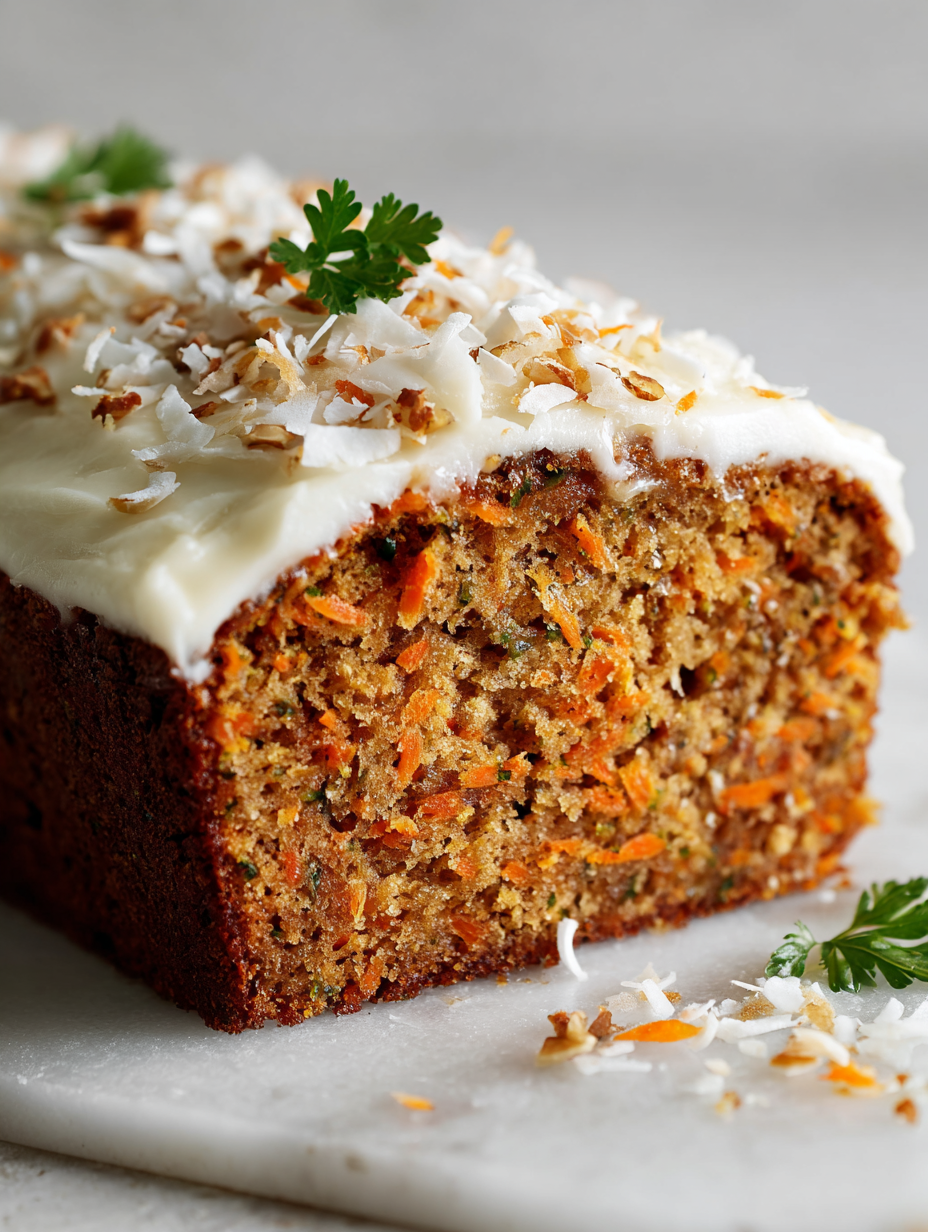
Carrot Cake Loaf
Ingredients
Equipment
Method
- Preheat your oven to 175°C (350°F). Grease a 9x5 inch loaf pan and dust lightly with flour; set aside.
- In a large mixing bowl, whisk together the all-purpose flour, baking powder, baking soda, cinnamon, and nutmeg until evenly combined. This ensures your spices are well distributed.
- Using a box grater, finely grate the fresh carrots until you have about 2 cups. Set aside the grated carrots.
- In a separate bowl, whisk together the light brown sugar, vegetable oil, and eggs until the mixture is smooth, slightly frothy, and fragrant—about 2 minutes.
- Fold the grated carrots into the wet mixture, then add the vanilla extract. Mix gently with a spatula, ensuring the carrots are evenly coated and distributed.
- Gradually add the dry ingredients to the wet mixture, folding gently until just combined. The batter will be lumpy and rustic, which is perfect for texture.
- If using, fold in the chopped walnuts or pecans for added crunch and flavor.
- Pour the batter into the prepared loaf pan, smoothing the top with a spatula for an even surface.
- Bake in the preheated oven for 50-60 minutes, or until the top is golden and a toothpick inserted into the center comes out clean. Keep an ear out for a fragrant, spicy aroma filling your kitchen.
- Once baked, remove the loaf from the oven and let it cool in the pan for about 15 minutes. Then transfer it to a wire rack to cool completely, which helps set the crumb and makes slicing easier.
- After at least 20 minutes of cooling, slice the loaf with a serrated knife and enjoy! Serve plain or with a spread of cream cheese for extra indulgence.
Pro tips for perfect carrot loaf
- Bolded mini-head: Grate carrots finely → ensures even moisture distribution and tender crumb.
- Bolded mini-head: Measure oil precisely → too much can make the loaf greasy; too little, dry.
- Bolded mini-head: Use fresh spices → they release more aroma and flavor during baking.
- Bolded mini-head: Don’t overmix batter → lumps are okay; overmixing leads to dense texture.
- Bolded mini-head: Tent the loaf if browning too fast → prevent over-torching and keep moist interior.
- Bolded mini-head: Cool in pan before transferring → helps set the crumb and avoid breaking slices.
- Bolded mini-head: Check doneness with a toothpick → comes out clean or with moist crumbs, not wet batter.
Common mistakes and how to fix them
- FORGOT to check oven temperature → Calibrate oven regularly for accurate baking.
- DUMPED in all ingredients at once → Mix wet and dry separately, then combine gently.
- OVER-TORCHED the loaf surface → Tent with foil at 45 minutes if browning too quickly.
- UNDERESTIMATED baking time → Start checking at 50 minutes; use a toothpick for doneness.
Quick fixes and pantry swaps
- When batter looks too thick → Splash in a teaspoon of milk for a lighter fold.
- If loaf cracks on top → Patch with a smear of batter and cover loosely with foil.
- When loaf feels dense → Rescue with a quick reheat and a drizzle of honey or glaze.
- Dumped in too many nuts → Toast nuts first to improve crunch and flavor contrast.
- When smell is faint → Open windows and increase spice quantity slightly next time.
Prep, store, and reheat tips
- You can grate the carrots and measure out your dry ingredients a day in advance; store the grated carrots in an airtight container in the fridge to keep them fresh and vibrant.
- The baked loaf keeps well for up to 3 days in an airtight container at room temperature, with the aroma of cinnamon lingering sweetly each time you open the jar.
- For longer storage, wrap slices tightly in plastic wrap and freeze for up to 1 month; the texture stays moist and the flavors remain intact upon reheating.
- Reheat slices gently in the microwave for 20-30 seconds until warm—watch for steam and a tender crumb. Alternatively, warm in a low oven at 150°C (300°F) for 10 minutes for a crispy crust.
- The flavors deepen overnight as the spices meld, making the loaf even more comforting the next day, though the moisture can slightly diminish. Best enjoyed fresh or within a few days.
Top questions about carrot cake loaf
1. Can I add pineapple to this loaf?
Adding crushed pineapple keeps the loaf moist and adds a subtle zesty sweetness, but it can make the batter wetter, so reduce the liquid slightly if you add it.
2. Should I use fresh or pre-shredded carrots?
Using pre-shredded carrots is convenient, but freshly grated carrots provide more moisture and vibrant flavor, making a noticeable difference in texture.
3. How should I store leftovers?
To keep the loaf fresh longer, wrap it tightly in plastic wrap or store in an airtight container at room temperature for up to 3 days. For longer storage, freeze slices and reheat as needed.
4. How do I know when it’s done?
Bake until the top is golden and a toothpick inserted in the center comes out clean. If the loaf cracks or browns too fast, tent with foil to prevent over-browning.
5. Can I replace oil with applesauce?
You can substitute applesauce for oil to make it a bit lighter, though the texture might be slightly less tender. Adjust the amount to prevent batter from becoming too wet.
6. Can I omit the nuts?
Adding walnuts or pecans is traditional, but toasted oats or shredded coconut work well for crunch if nuts aren’t preferred or available.
7. What’s the difference between light and dark brown sugar?
Using dark brown sugar will give a richer, deeper caramel flavor, while light brown sugar keeps it milder and sweeter. Adjust based on your flavor preference.
8. How should I store spices?
Fresh spices release more aroma; store cinnamon and nutmeg in a cool, dark place and use within six months for the best flavor.
9. Why is my loaf dense or rubbery?
Ensuring the batter is not overmixed keeps the loaf tender. Mix just until the ingredients are combined, lumps and all.
10. How can I make it more spicy?
For a more pronounced spice flavor, increase the cinnamon and nutmeg slightly, but avoid overpowering the natural sweetness of the carrots.
Baking this carrot cake loaf offers a quiet moment to reconnect with simple, honest ingredients that nourish both body and memory. Each slice carries the warmth of spices and the moist, tender crumb, reminding me why I fell in love with baking in the first place.
It’s a humble bake that feels like a small act of kindness—perfect for sharing or keeping close on cozy mornings. No matter the occasion, it’s a reminder that comfort often comes in the familiar, unpolished form of a well-made loaf.

Hi, I’m Noah Bennett, the creator behind Breathing In Flavors. For me, cooking begins with a breath. Before the first bite, before the plating, before the garnish, there is that quiet moment when steam rises and you inhale. That is where flavor truly begins. Breathing In Flavors is my space to slow down, appreciate ingredients, and cook with awareness. I am so glad you’re here.
 The creator behind Breathing In Flavors.
For me, cooking begins with a breath. Before the first bite, before the plating, before the garnish, there is that quiet moment when steam rises and you inhale. That is where flavor truly begins.
Breathing In Flavors is my space to slow down, appreciate ingredients, and cook with awareness. I am so glad you’re here.
The creator behind Breathing In Flavors.
For me, cooking begins with a breath. Before the first bite, before the plating, before the garnish, there is that quiet moment when steam rises and you inhale. That is where flavor truly begins.
Breathing In Flavors is my space to slow down, appreciate ingredients, and cook with awareness. I am so glad you’re here.